
How to Grow and Use French Tarragon
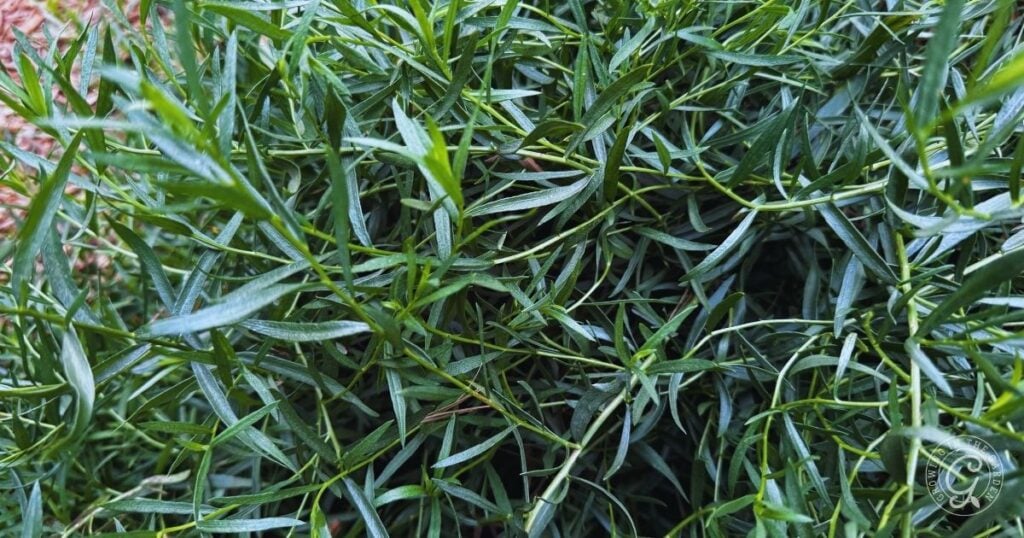
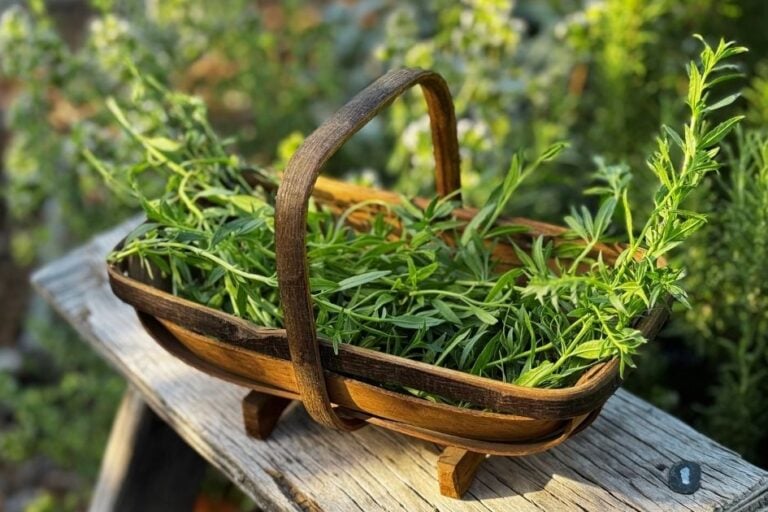
Tarragon might grow all over the world (even here in Arizona), but not all tarragon is worth planting. Most varieties have little to no flavor, which can be a letdown if you’re hoping to use it in the kitchen. The one you want is French tarragon (Artemisia dracunculus var. sativa), the flavorful, aromatic type that brings chicken, fish, and egg dishes to life. I added it to my garden last year and have been so impressed with how easy growing and caring for French tarragon can be and how much flavor it adds to meals. Get ready to harvest and use your tarragon!
What we will cover:
- French Tarragon vs. Russian Tarragon
- Where to Get French Tarragon
- When to Plant French Tarragon
- How to Care for French Tarragon
- How to Harvest and Use French Tarragon
- FAQ About Growing French Tarragon
French Tarragon vs Russian Tarragon: How to Tell the Difference
A common question gardeners have is: can you grow French tarragon from seed? Many gardeners (including me!) are surprised to learn that French tarragon does not grow from seed. Instead, it is propagated by root division because its flowers are sterile.
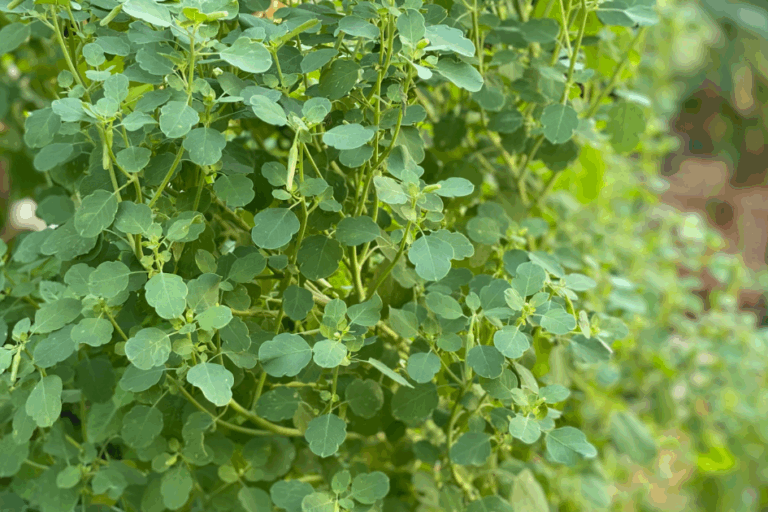
Can you grow French tarragon from seed? No! Seed packets labeled as “tarragon” typically contain Russian tarragon, a more vigorous but inferior variety with a much milder flavor. If you want the rich, anise-like aroma and taste that defines classic French dishes, seek out true plants or cuttings.
Knowing the difference between French tarragon vs Russian tarragon helps ensure you’re growing the variety with the best flavor and aroma.
Where to Get French Tarragon Transplants
Since French tarragon is only available as plants or cuttings, check with local nurseries or specialty herb growers.
When to Plant French Tarragon
French tarragon grows best when planted during the mild seasons of the year. Timing depends on your climate, and it’s important to note that tarragon is frost sensitive, especially when newly planted. If planting in the fall, be prepared to protect young plants from early cold snaps.
- Low Desert (Zones 9–10):
Plant in early spring (March–April) or fall (October–early November) so it can get established before extreme temperatures arrive. Provide frost protection for fall plantings. - Cool and Temperate Climates (Zones 5–8):
Plant in spring after the last frost. Tarragon goes dormant in winter and comes back in spring. - Cold Climates (Zone 4 and below):
Plant in spring, and mulch well in fall to protect the roots. Consider growing in containers you can bring indoors over winter. - Mild or Coastal Climates (Zones 9–10 coastal):
Plant in spring or fall, and give some afternoon shade during hot months.
Want to know the best times to plant herbs like tarragon in the low desert? Check out the Arizona Herb Planting Guide.
How to Care for French Tarragon
French tarragon is a perennial herb that thrives in well-drained soil and moderate water conditions. Here’s how to grow and care for French tarragon successfully:
- Sun Requirements: Full to part sun. In hotter climates like Arizona, it benefits from afternoon shade.
- Soil: Well-drained, fertile soil enriched with compost or organic matter.
- Watering: Moderate, similar to other perennial herbs. Avoid overwatering, as tarragon dislikes soggy soil.
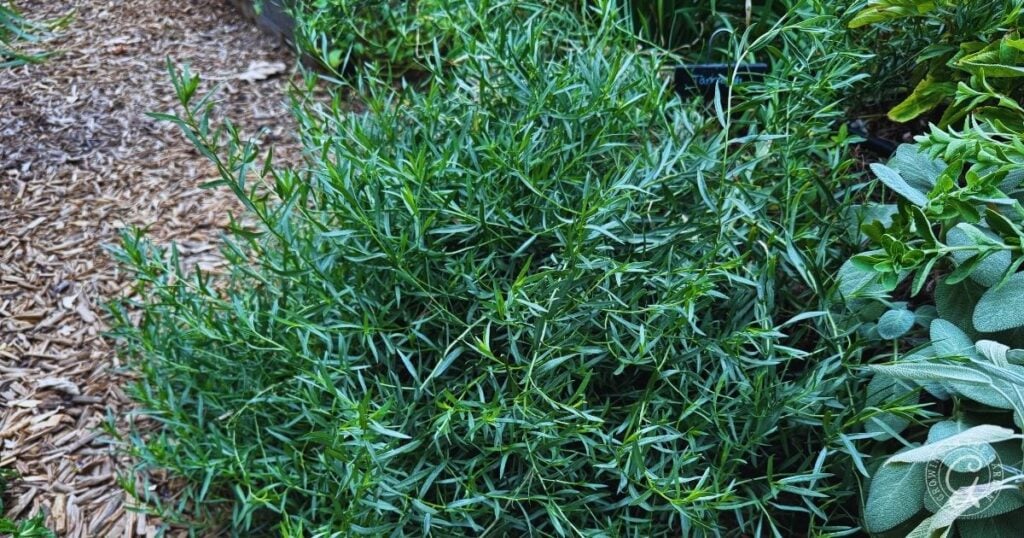
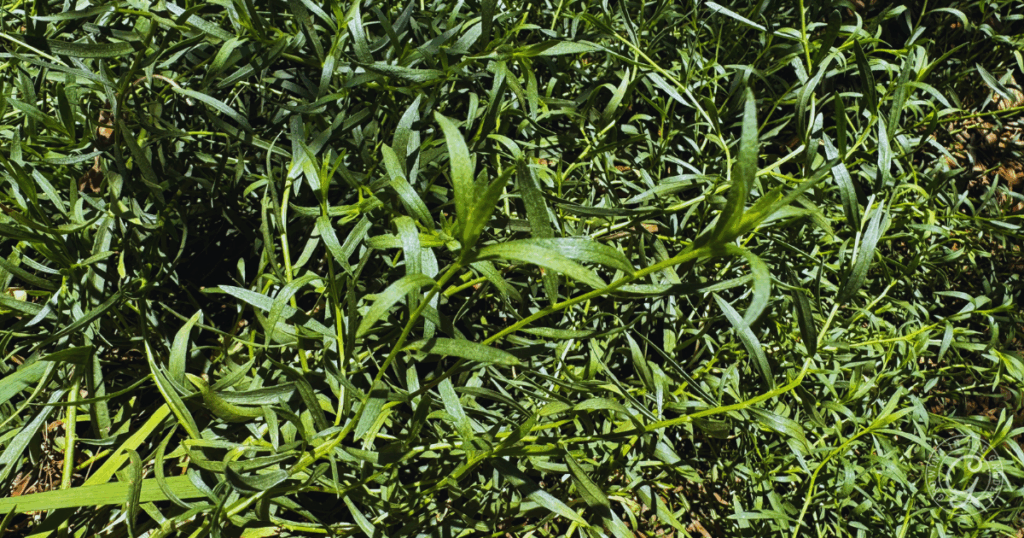
- Growth Habit: Plants can reach 18-24 inches (45–60 cm) tall, with slender, green, aromatic leaves. It is a trailing herb and is best planted at the end or side of a bed so it has room to spread.
- Dormancy: In cold winters, plants may go dormant but will return in spring. In very hot summers, it may slow or stop growing as well, but should revive again as temperatures moderate.
If you’re in a hot or dry climate, check out how to grow herbs in hot summer climates for more herb growing tips.
French Tarragon Plant Spacing
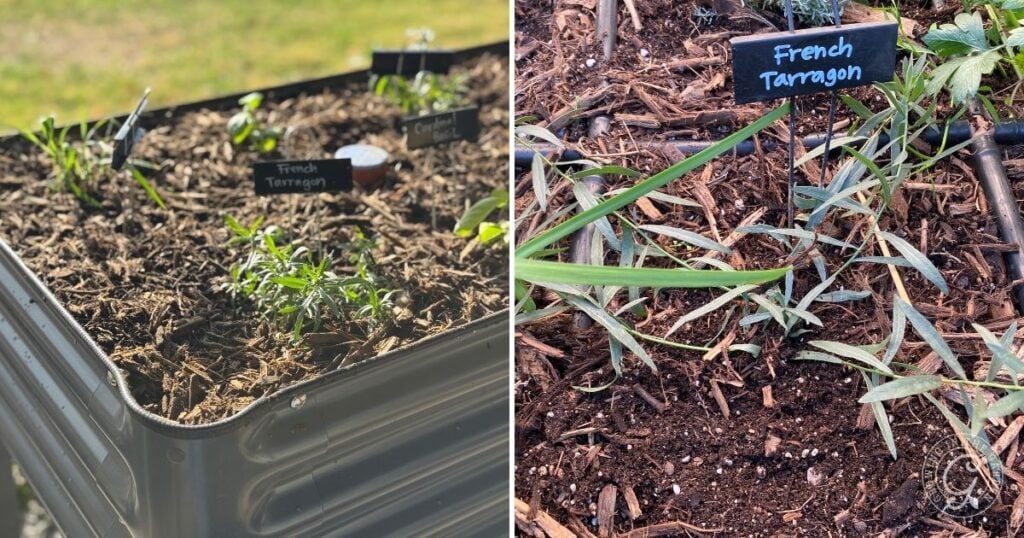
- Spacing: 18–24 inches (45–60 cm) apart
- Row spacing (if planting in rows): 18–24 inches (45–60 cm)
- Container size: At least 12 inches (30 cm) wide and deep per plant
French tarragon prefers good air circulation, especially in humid conditions, so give each plant plenty of room to grow and spread. This also helps reduce the risk of fungal issues.
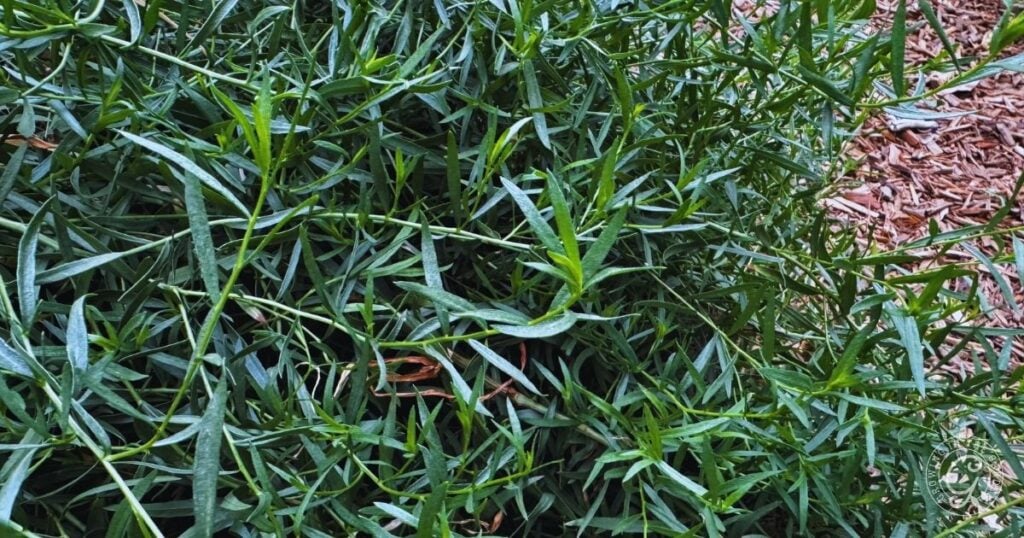
By giving French tarragon the right care—well-drained soil, moderate watering, regular pruning, and winter protection—you’ll enjoy a healthy, flavorful herb year after year.
How to Harvest and Use French Tarragon
Harvesting:
- Begin harvesting once the plant is well-established and about 6–8 inches tall.
- Use clean scissors or snips to trim stems, cutting just above a leaf node to encourage bushier growth.
- Harvest in the morning for the best flavor and oils, before the heat of the day.
How to use it:
Once you’ve tasted true French tarragon, you’ll find yourself adding it to all kinds of dishes. Tarragon is one of the classic fines herbes in French cooking.
What Are Fines Herbes?
Fines herbes is a classic French herb blend made from fresh, delicate herbs—usually tarragon, parsley, chives, and chervil. These herbs are added at the end of cooking to preserve their delicate flavors.
Tarragon is the key flavor in Béarnaise sauce and pairs beautifully with vinegar, butter, and grilled meats. Try blending it into an herb butter (similar to what I do with rosemary), or steeping a few sprigs in vinegar for a simple homemade tarragon vinegar.
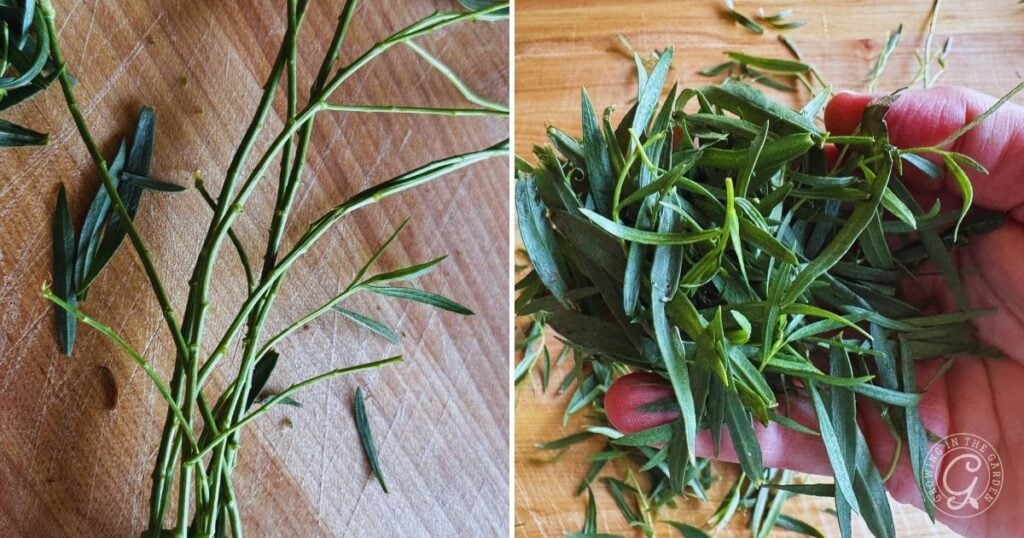
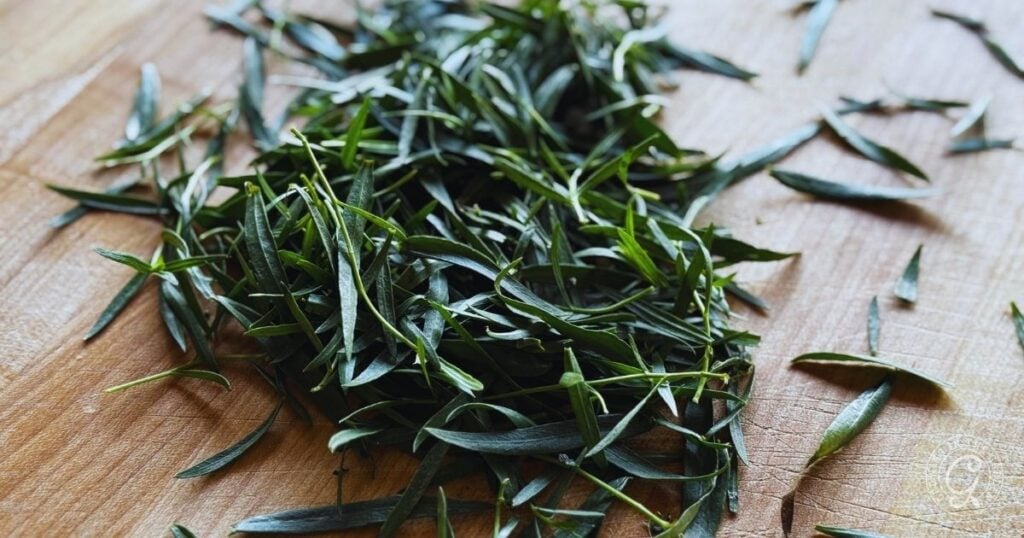
- Fresh use: Strip the leaves from the stem by running your fingers backward along the stalk. The leaves are tender and don’t need chopping unless you want them very fine.
- Best fresh: Tarragon is most flavorful when fresh. It adds a bright, slightly licorice-like flavor to chicken, fish, eggs, and sauces. Toss chopped tarragon into green salads or potato salad.
Should you dry it?
- You can dry tarragon, but much of its flavor is lost in the process.
- If you want to preserve the flavor long-term, try freeze drying or storing it in vinegar or oil instead.
- Learn how to preserve herbs with this guide: How to Freeze Dry Herbs.
If you’re building a full herb garden, tarragon fits in beautifully alongside other heat-tolerant culinary herbs like basil and thyme. With the right mix of herbs, your garden can be productive and flavorful year-round.
Best Vinegar and Oil for Infusing with Tarragon
Always use clean, dry herbs, and store infused vinegar or oil in a clean glass container in the refrigerator for safety.
Vinegar:
- White wine vinegar – The classic choice for making tarragon vinegar. It’s mild and doesn’t overpower the herb’s delicate flavor.
- Champagne vinegar – Light and slightly fruity, great for a more refined tarragon infusion.
Oil:
- Light olive oil – Use a mild, light-tasting olive oil (not extra virgin) to avoid overpowering the tarragon.
- Grapeseed oil – A neutral oil with a clean flavor and good shelf life, ideal for subtle herb infusions.
How to Make Tarragon-Infused Vinegar or Oil
Tarragon Vinegar (Cold Infusion Method):
- Lightly bruise a few sprigs of fresh French tarragon to release the oils.
- Place the sprigs in a clean, sterilized glass jar or bottle.
- Pour in white wine vinegar or champagne vinegar to cover.
- Seal tightly and store in a cool, dark place for 2–3 weeks, shaking gently every few days.
- Taste after 2 weeks. Once infused to your liking, strain out the herbs and store the finished vinegar in a clean bottle in the refrigerator.
Tarragon-Infused Oil (Refrigerated Cold Infusion Method):
- Use the same method as above, using light olive oil or grapeseed oil instead of vinegar.
- Store the oil in the refrigerator only, and use within 2 weeks.
Because infused oils carry a risk of botulism when stored at room temperature, always refrigerate and discard if it becomes cloudy or smells off.
FAQs about French Tarragon
1. Can you grow French tarragon from seed?
No. Unfortunately, it does not produce viable seeds. It must be propagated from cuttings or root divisions.
2. What is the difference between French and Russian tarragon?
French tarragon has a stronger, more complex flavor with notes of anise, while Russian tarragon is less flavorful and often grown from seed.
3. Will French tarragon survive winter?
Yes, French tarragon is a perennial in zones 5–10 and goes dormant in winter. In colder zones, mulch heavily or grow it in containers you can bring indoors.
4. How do you preserve fresh French tarragon?
Tarragon can be frozen, freeze-dried, or preserved in vinegar or oil. Drying is possible, but much of the flavor is lost.
5. Can I grow French tarragon in pots or containers?
Absolutely. French tarragon does well in containers, especially in areas with harsh winters or poor drainage.
6. What dishes go well with French tarragon?
Tarragon complements chicken, eggs, fish, sauces (like Béarnaise), herb butters, salad dressings, and potato or green salads.
7. How much sun does French tarragon need?
It prefers full sun but appreciates afternoon shade in hot climates, such as Arizona.
8. Why does my French tarragon stop growing in summer?
In very hot climates, tarragon may go semi-dormant during peak summer heat but usually recovers when temperatures cool down.
9. Is it safe to make tarragon-infused oil at home?
Yes, but it must be refrigerated and used within 2 weeks to prevent bacterial growth. Never store tarragon oil at room temperature.
10. What kind of vinegar is best for tarragon vinegar?
White wine vinegar is the classic choice, but champagne vinegar can also work well.


Leave a comment on How to Grow and Use French Tarragon