
How to Hand Pollinate Squash (Step-by-Step Guide)
If your squash flowers are blooming but the fruit keeps shriveling or falling off, you’re not alone. One of the most common causes of failed squash harvests is poor pollination.
In this guide, you’ll learn how to hand pollinate squash step by step, when and why it’s needed, and which plants it works for. Hand pollination can mean the difference between a garden full of healthy fruit and one full of withered blossoms.
What We’ll Cover in This Guide
- How to tell if your squash isn’t getting pollinated and why hand pollination might be necessary
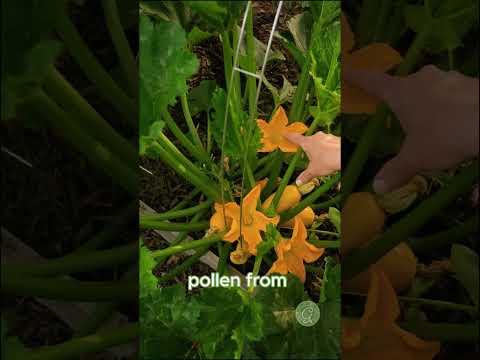
- The difference between male and female squash flowers
- Step-by-step instructions for hand pollinating squash using male flowers or a brush
- Best time of day to hand pollinate for the best results
- Common concerns about cross-pollination and seed saving
- Other vegetables and fruits that may need hand pollination
- How to tell the difference between poor pollination and blossom end rot
- Additional resources for growing healthy squash all season
Why Hand Pollinate Squash?
Squash plants depend on pollinators like bees to move pollen from male to female flowers. But early in the season, pollinator activity may be low, or the plant may only produce one type of flower at a time. This leads to poor pollination and fruit that shrivels before developing.

Hand pollination gives you more control and helps ensure early fruit set, especially if:
- Bees and other pollinators are not active in your garden
- The plant is producing only male or only female flowers
- You are growing in a small space or protected area (like a screened-in garden or greenhouse)
Male vs. Female Squash Flowers
Before you can hand-pollinate, it’s important to know how to identify the two types of squash flowers:
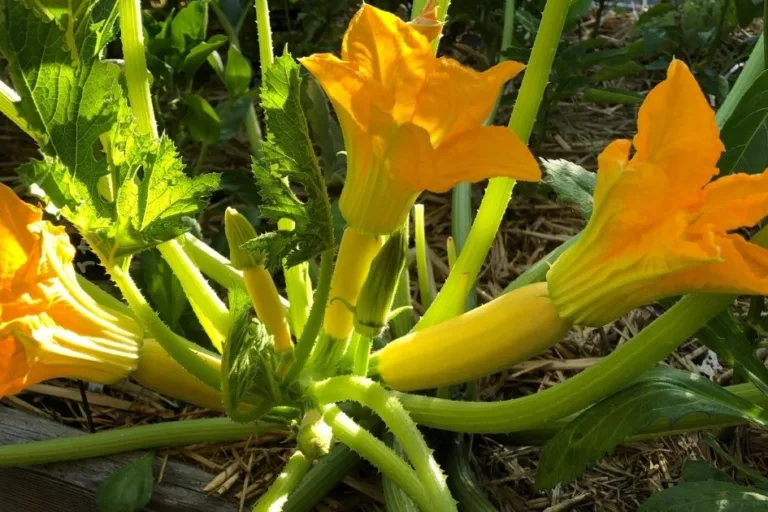
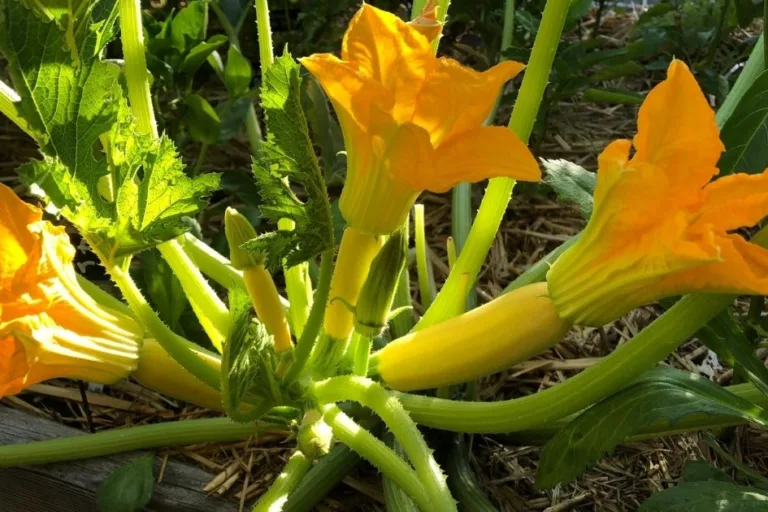
- Male flowers have a long, thin stem and a central stamen covered in pollen. They often appear first.

- Female flowers have a small, immature fruit (baby squash) at the base and a central pistil inside the bloom.

You need one male flower and one female flower open at the same time for successful pollination.
When to Hand Pollinate Squash
- The best time to hand-pollinate is in the morning, when the flowers are fully open and the pollen is fresh.
- Squash flowers often close by afternoon, so check early each day for new blossoms.
- Hand pollination is especially helpful early in the season, when flower production is just beginning and fewer pollinators are active.

How to Hand Pollinate Squash (Two Methods)
Method 1: Using a Male Flower
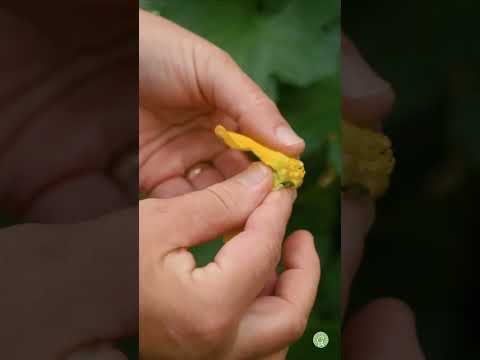
- Identify a male flower and gently remove it from the plant.
- Peel back or remove the petals to expose the pollen-covered stamen.
- Lightly touch the stamen to the center of an open female flower, brushing the pollen onto the pistil.
- Discard the male flower or save it to use again the next day if the stamen is still intact.

Method 2: Using a Brush or Swab
- Leave the male flower attached to the plant.
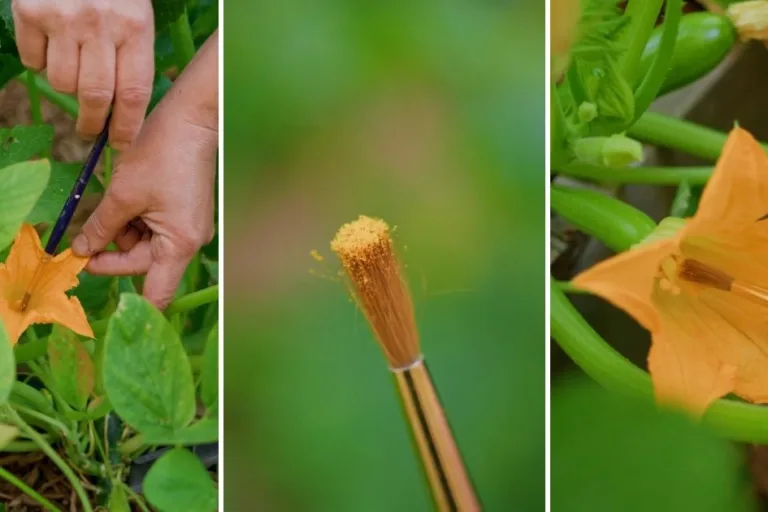
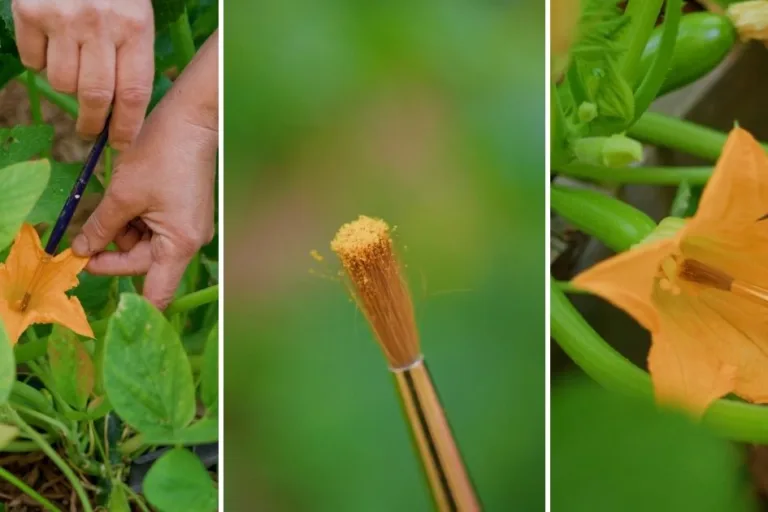
- Use a small paintbrush or cotton swab to collect pollen from the male stamen.
- Gently brush the collected pollen onto the pistil inside a female flower.
- Repeat with other female blossoms if needed.
This method keeps male flowers intact, allowing you to use them for multiple pollinations over a couple of days.

Will Cross-Pollination Affect My Fruit?
You can use any male summer squash to pollinate any female summer squash—cross-pollination will not affect the fruit you harvest this season.

However, if you plan to save seeds:
- Cross-pollination will affect the next generation of plants.
- Seeds from cross-pollinated squash may not grow true to the parent plant.
To maintain pure seed lines, you’ll need to isolate varieties or hand-pollinate and bag flowers for seed-saving purposes. Learn more about how to save seeds in this guide.
Other Plants That May Require Hand Pollination
Hand pollination is useful for many vegetables with separate male and female flowers or limited pollinator access. These include:
- Cucumbers
- Cantaloupe
- Pumpkins
- Gourds
- Watermelon
- Other summer and winter squash
Plants with perfect flowers (containing both male and female parts in one bloom), like tomatoes and peppers, do not need hand pollination but may benefit from vibration or gentle shaking if pollinator activity is low.
Wilting or Rotting at the End of Squash? Here’s What It Might Be
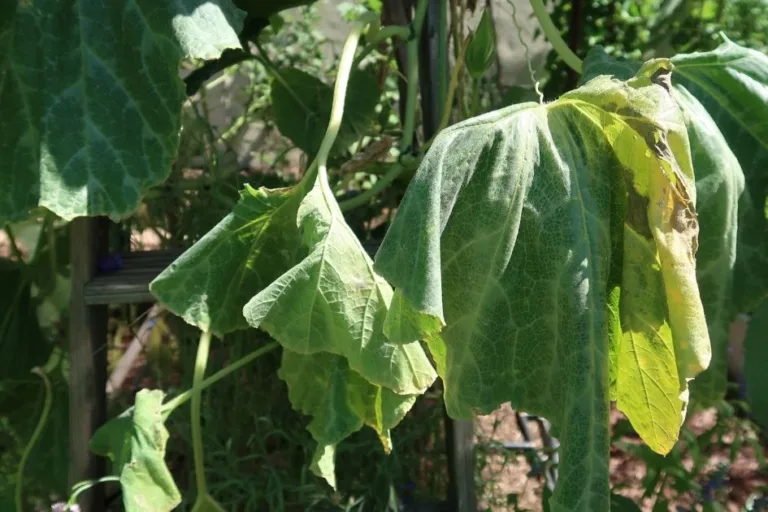
If your squash is shriveling or wilting at the blossom end, it may be due to poor pollination—not necessarily a disease or nutrient deficiency.
- Poor pollination results in small fruit that stop growing and wither before maturing.
- Blossom end rot causes a dark, sunken, leathery spot at the blossom end, often due to inconsistent watering or calcium deficiency.
While both issues affect the same area of the fruit, they have different causes and solutions.

Learn how to identify and prevent blossom end rot here.
FAQ: Hand Pollinating Squash
Do I need to hand-pollinate every flower?
No. Once pollinators are active and both flower types are present, you may not need to hand-pollinate. Focus on early flowers or if you notice shriveled fruit.
Can I use the same male flower for more than one female flower?
Yes. A single male flower can pollinate multiple female flowers, especially when using a brush or swab.
Why are there only male flowers on my squash plant?
It’s common for squash to produce only male flowers early in the season. Female flowers usually appear within a week or two.
Will hand pollination improve yield?
Yes. In small gardens or low-pollinator environments, hand pollination can increase early yield and help ensure your first fruits set properly.
How long after pollination will the fruit grow?
If pollination is successful, you’ll typically see noticeable fruit growth within 2 to 3 days.
More Resources on Growing Squash
Explore more squash growing tips in these related blog posts:
- 5 Tips for Growing Summer Squash
- 8 Summer Squash Varieties to Grow
- How to Grow Butternut Squash
- How to Grow Patty Pan Squash
- How to Grow Winter Squash
- Squash Bug Prevention and Organic Control
- How to Grow a Three Sisters Garden in Raised Beds

Leave a comment on How to Hand Pollinate Squash (Step-by-Step Guide)